
Add Sawarri to your home screen
Sawarri then opens as a full-screen app. Your browser does the adding — here is where the option is:
Sawarri then opens as a full-screen app. Your browser does the adding — here is where the option is:
“Ride sharing”, “rideshare”, “car sharing”, “ride-hailing”, “carpooling” — five words, used interchangeably, for three genuinely different things. If you are trying to work out which one you need in Pakistan, the words are most of the problem. This page takes them apart.
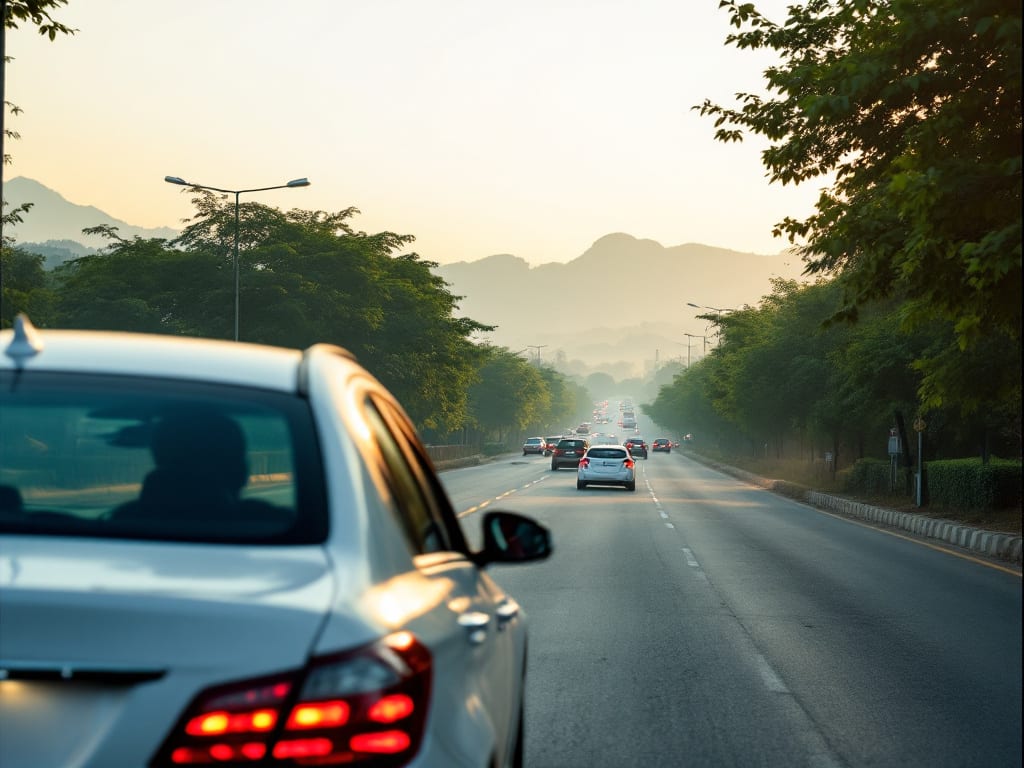
1. Sharing a trip someone is already making. A driver is going from Wah Cantt to Islamabad at 7am because that is where they work. There are three empty seats. You take one and pay a share of the fuel. Nobody is employed, nothing is dispatched, and the car was leaving with or without you. In most of the world this is called carpooling; in Pakistan people usually say ride sharing, ride share, or pick and drop when it is a daily arrangement.
2. Booking a car and a driver on demand. You open an app, say where you want to go, and a driver is sent. This is ride-hailing — InDrive, Yango, Bykea. You are buying the whole car and the driver’s time, so it costs accordingly.
3. Renting a vehicle by the hour or day. Internationally this is what car sharing means — Zipcar-style, you unlock a car and drive it yourself. It barely exists in Pakistan, so when a Pakistani says car sharing they almost always mean the first thing.
Nearly everyone searching “ride sharing Pakistan” wants the first one, and nearly every result they get is the second one. That gap is the whole reason this page exists.
Ask: would this car have made the trip if you had not booked?
Everything else — price, flexibility, waiting, who you sit with — follows from that one answer.
Three things are true at once, and they explain the current shape of it:
Ride sharing is not a general-purpose replacement for a taxi. It is extremely good at a narrow set of trips and poor at the rest.
It is a bad fit for a one-off trip at an odd hour, a door-to-door journey where you cannot walk to a main road, or anything you need in the next ten minutes. For those, hail a car.
There is no national rate and any figure printed on a page is wrong within a month. What matters is the method: a shared fare is built from the trip’s real fuel cost divided by the people in the car, sometimes with a little for tolls on a motorway route. Intercity is usually quoted per seat per trip; a daily commute is usually quoted monthly.
If you are the driver and unsure what to ask for, how to split fuel costs fairly walks through it. The rule that keeps a shared ride healthy: charge what the trip costs you, not more. The moment it turns a profit, it stops being a shared ride and the people in it start behaving like customers.
It is as safe as the care you take setting it up, and the basics are not complicated:
The full checklist is on the safety page.
In Pakistani usage, yes — most people use the two words for the same thing: sharing a trip that was already happening and splitting its cost. Internationally “ride sharing” sometimes gets used loosely for ride-hailing too, which is where the confusion comes from.
For hailing a car, InDrive and Yango have the widest coverage, with Bykea strong on bikes and short hops. For genuine ride sharing — joining a trip someone is already making — there is no single dominant service; most of it still happens in WhatsApp and Facebook groups, which is the gap a public ride board fills.
Sharing your own private car with people going the same way and taking a contribution towards fuel is an ordinary private arrangement. Running a vehicle commercially as a transport service is a different activity with its own licensing rules. The practical line: cost-sharing is ride sharing, profit-making is a business.
No. Most of it is arranged over WhatsApp with no app at all. What a site adds is visibility — being able to find a route without first being invited into somebody’s group. More on the options in carpooling apps in Pakistan.